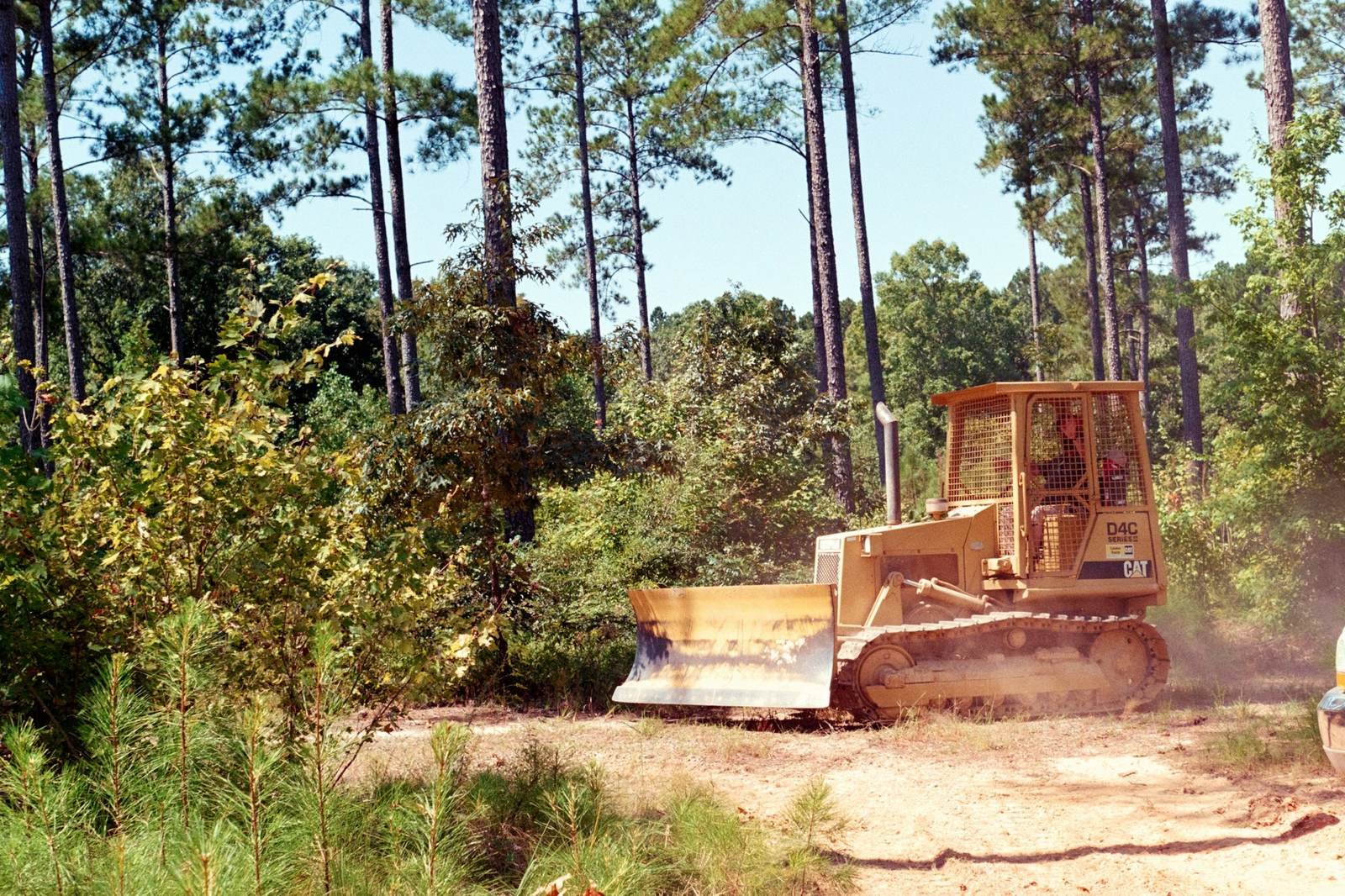
Around Chattanooga, a lot left alone for a few years fills in fast with sweetgum, Virginia pine, privet, honeysuckle and kudzu. Whether you're getting ready to build in Ooltewah, opening up the back of a wooded lot in Soddy-Daisy, or reclaiming a pasture in Catoosa County, the right clearing method depends on what's growing and what you want left.
Types of clearing
- Underbrush clearing: remove brush, vines and small trees, and keep the larger trees. Good for wooded lots you want to walk through and use.
- Selective clearing: remove specific trees for a house pad, driveway, view or garden, and leave the rest.
- Full clearing: remove everything for construction, including stumps and roots, and leave graded dirt.
- Forestry mulching: grind brush and small trees into mulch in place. It's fast and leaves no piles.
- Invasive removal: privet, kudzu, autumn olive and bush honeysuckle usually need follow-up treatment, or they come back.
Before you clear
- Mark your property lines. Clearing onto a neighbor's land is an expensive mistake. If the corners aren't marked, consider a survey.
- Call 811 so buried utilities are marked: Tennessee 811 or Georgia 811, depending on the address.
- Flag the trees you want to keep, and ask the crew to protect the ground under them. Machine traffic over roots can kill a tree years later.
- Check for permits if you're building, working on a slope, or near a creek.
- Decide what happens to the material: mulched in place, chipped and hauled, or logs left for firewood.
What drives the cost
Clearing is priced by the job, not per tree. Crews look at acreage, how thick the growth is, the size of the trees, the slope, how close the work is to houses, and whether stumps have to come out. Light underbrush on flat ground is far cheaper per acre than a steep, densely wooded lot. Ask for a site visit and a written quote. If you'll need individual stumps ground afterward, see stump grinding.
Common questions
What is forestry mulching?
A machine with a mulching head grinds standing brush and small trees into mulch where they stand. Nothing has to be hauled or burned, and the mulch layer helps hold the soil. It's a good fit for underbrush, privet and trees up to about 6 to 8 inches thick.
Can I burn the brush instead of hauling it?
Sometimes. Tennessee requires a free burn permit for outdoor burning from October 15 through May 15, and Georgia has its own burn rules and seasons. Many cities, including Chattanooga, restrict or ban open burning inside city limits. Check before you light anything.
Do I need a permit to clear my lot?
Clearing for a building project is often tied to a grading or building permit, and disturbing land near streams or on slopes can bring erosion control rules. If you're building, ask your builder or the city or county permit office before clearing.
Can you leave the big trees?
Yes. Selective clearing removes underbrush, invasive plants and small trees while keeping the best hardwoods. It's often the best way to get a usable, shaded lot.