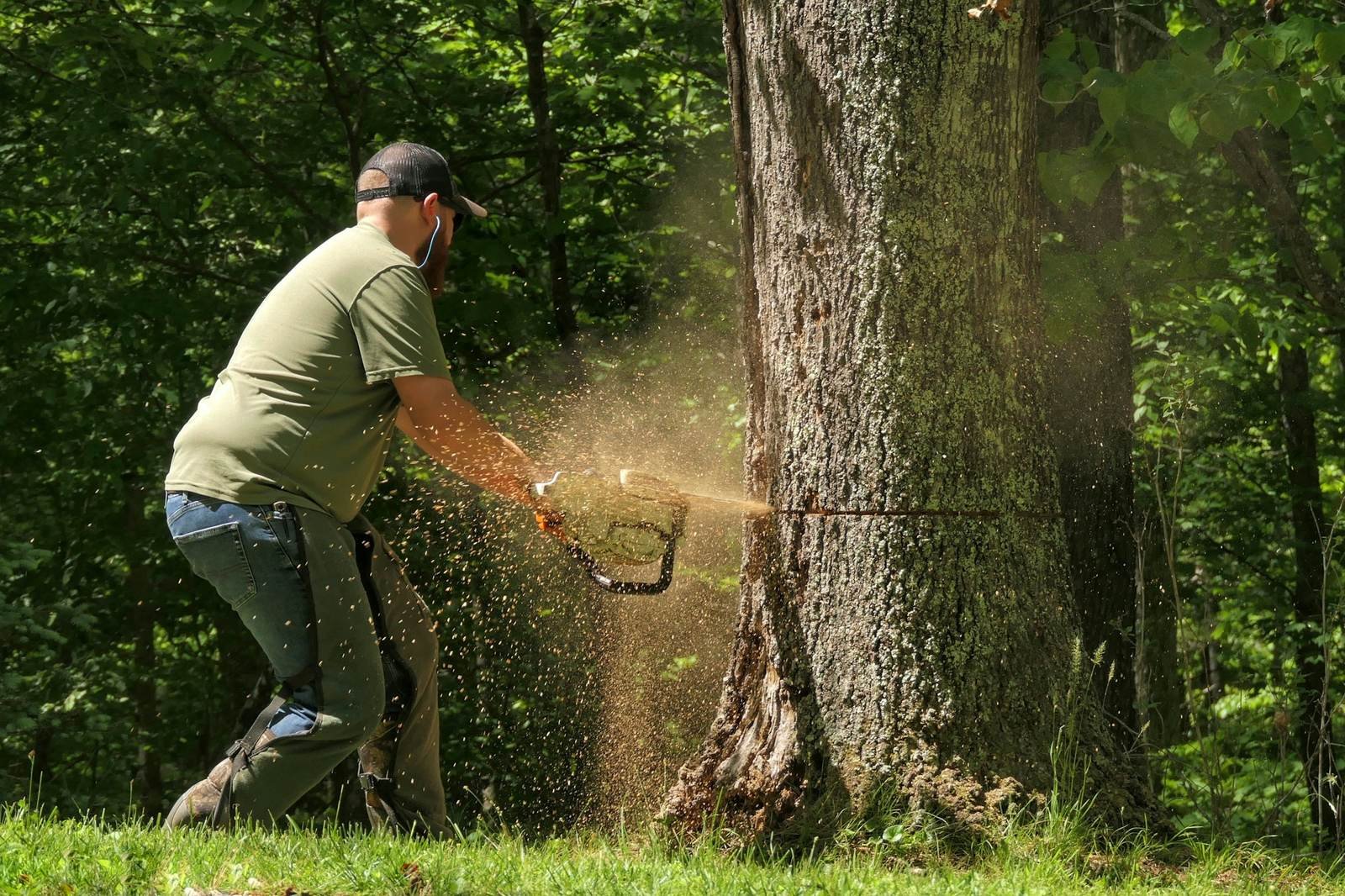
Removing a tree near a house is skilled, dangerous work. In Chattanooga it often means a tall oak or tulip poplar on a slope, close to a roof, a fence or a power line, with no room to drop it in one piece. A good crew takes it down in sections, lowers each piece on ropes, and leaves the yard cleaner than they found it.
When a tree should come down
- It's dead or mostly dead. Dead wood gets brittle fast. A dead tree near a house or driveway should come down before the next storm. See dead and hazard tree removal.
- It's leaning more than it used to, or the soil is heaving or cracking on the side away from the lean.
- The trunk has a large cavity, fungus at the base, or a long crack.
- Roots are lifting the foundation, driveway or sewer line.
- It's an ash tree. Emerald ash borer was confirmed in Hamilton County in 2013, and most untreated ash trees in the area are dying or dead.
- It's simply in the wrong place: a pine that drops limbs on the roof every winter, or a tree blocking an addition or a new driveway.
How a removal works
- Free quote. The crew looks at the tree's size, lean and condition, what it could hit, and how equipment can reach it. You get a written price.
- Setup. Drop zones are marked, and cars and patio furniture are moved. If the tree is near the line from the pole to your house, the crew arranges a temporary disconnect with the utility.
- Takedown. In an open yard the tree may be felled in one piece. Near a house it's climbed or reached with a bucket truck, and cut and lowered in sections.
- Cleanup. Brush is chipped, logs are cut and hauled (or left if you want firewood), and the area is raked and blown off.
- Stump. Ground out the same day or on a return visit, if you ordered it.
What affects the price
Size matters most, but access and risk often matter more. A 60-foot pine in an open field can cost less than a 40-foot oak hanging over a house on a Signal Mountain slope. The main factors:
- Height and trunk diameter
- What's underneath: a roof, a pool, power lines, a neighbor's fence
- Whether a bucket truck or crane can reach it, or a climber has to rig it by hand
- Tree condition (dead trees can be more dangerous to climb)
- Stump grinding, log hauling and full cleanup
National cost surveys put a typical removal somewhere around $385 to $1,070, with large or risky trees running well above that. Our Chattanooga tree removal cost guide breaks it down.
What to ask before you hire anyone
- Proof of liability insurance. Ask for the certificate, not just a yes. Tennessee doesn't license tree services at the state level, so insurance is your main protection.
- Workers' compensation coverage, so an injury on your property isn't your problem.
- What the price includes: stump, log hauling, cleanup, and any damage to the lawn.
- A written quote. Be careful with anyone who knocks on doors after a storm and asks for cash up front.
Doing part of it yourself? Chattanooga's city brush pickup takes wood up to 8 feet long and 18 inches thick, in piles no more than 4 feet high, requested through 311. Larger logs need to be hauled by the crew.
Common questions
Do I need a permit to remove a tree in my Chattanooga yard?
For a tree on your own residential lot, usually not. The City of Chattanooga's tree ordinance focuses on public trees (street and right-of-way trees) and on land being developed. Trees in the right-of-way need the city's approval, and historic districts can add review. Signal Mountain, Lookout Mountain, Red Bank and the Georgia towns set their own rules, so check with your town hall if you're unsure.
Is stump grinding included?
Not always. Many crews quote the stump separately. Ask for it on the same quote, because grinding while the crew is already on site is usually cheaper than a second trip. See our stump grinding page.
What happens to the wood?
Most crews chip the branches and either haul the logs away or leave them cut to firewood length if you ask. Leaving the wood can lower the price.
How long does a removal take?
A small or medium tree in an open yard is often a few hours. A large tree over a house, or one that needs climbing and rigging, can take a full day.
Will the crew damage my lawn?
Heavy equipment can leave ruts, especially when the ground is wet. Ask how they'll access the tree and whether they use mats or smaller machines on soft ground.